

Deodorant vs Antiperspirant: What's the Difference?

In this post
I make deodorant. I will never make an antiperspirant. An antiperspirant reduces how much you sweat, using aluminium salts that form temporary plugs in your sweat ducts. A deodorant deals with the smell, which comes from bacteria breaking down sweat on your skin. Cancer Research UK and the Alzheimer's Society haven't found convincing evidence that antiperspirants cause harm, so this isn't about fear. It's about working with your body instead of blocking it, reading every ingredient on the label, and creating less waste. Here's the science, and why I chose the second.
Why I make deodorant, never antiperspirant
I studied radiotherapy at university. I held patients' hands while they undressed and climbed onto the table. I sat with them while their wigs were fitted. I walked beside them when they were unsteady on their feet. I comforted their relatives, and I hugged their partners and children. I saw and felt every step.
I'm not a doctor, and I can't tell you what causes any one person's cancer. Nobody can. And the research doesn't say your antiperspirant is the culprit - I'll come to exactly what it says. But I came away with a belief I've never shaken: our bodies are delicate, complicated systems, and I'd rather give mine fewer unknowns. I won't block a normal function, and I won't put in what I don't need to.
That's a belief, not a fact. It's what I stand by, and it's why CONCHUS exists. I can't prove it. I won't ignore it.

What it took to get it right
Believing it wasn't enough. A deodorant that doesn't work is just a nice idea.
I spent months researching. Then I spent more months developing the formula. I almost gave up more than once, because it worked, but it didn't feel right on my skin. So I kept going. After more versions than I can remember, tested by my friends and family, I had a deo cream I'd put on my own skin every day.
It's now my best selling product, and the one with the most reviews. Every order has at least one tin in it.
Customers tell me they've finally found a deodorant that works and doesn't irritate their skin, and that they've swapped out a long list of ingredients they didn't want to be using. Here's what some of them say:
Great for sensitive skin
This is the only stuff I have used which works and doesn't cause itching and irritation over time. I love that my husband loves this deo cream.
- Will R., CONCHUS customer review
I cannot recommend this deo cream highly enough. Where do I start about what I love about it? My husband does a lot of long distance walking and used to pong a bit at the end of the day. Not anymore! It's amazing how such a little bit of the deo cream can work so well. And for me the best bit of him using this deo cream is there is no sticky residue left on his teeshirts that is such a pain to get clean. He wears dark teeshirts and the sticky white mess left on the underarms by a well known brand of refillable deodorant was truly disgusting and so hard to remove. No laundry problems with Conchus!
- Annikki, CONCHUS customer review
Life changing
I've been using CONCHUS Deo Cream for years now! And I LOVE IT. I don't ever smell any more (well only of nice deo cream) it's like the product has balanced my underarms. Can't recommend it enough. Thank you Conchus.
- CONCHUS customer review
What hundreds of reviews keep telling me
Those aren't isolated comments. My deo creams have now had more than 800 reviews across the range, averaging almost 5 out of 5. And the same story comes up again and again. People have tried everything. Big-name antiperspirants. A long line of natural deodorants that itched, or didn't last the day. Then they found a daily deodorant that keeps them fresh, doesn't irritate their skin, and has ingredients they can actually read and understand. A few more, in their own words:
I had previously been using Mitchum as I never felt confident without a strong deodorant, especially going through perimenopause. ... I got a free sample of Conchus a couple of months ago and it's been a game changer. I use a pea sized amount and I still smell fresh at the end of the day. It's even worked after a sweaty game of tennis. I'll never go back.
- Li N., CONCHUS customer review
The best!
I can't count how many different natural deodorants I have tried - so many brands, expensive, not expensive and without a doubt, this one is absolutely the best. It works the longest, doesn't irritate my skin, the tiny travel size lasts for ages.
- Natalie J., CONCHUS customer review
Deodorant perfection!
I have used many natural deodorants, conchus are always my go to, repeat purchase ... and it doesn't irritate my sensitive skin.
- Kate C., CONCHUS customer review
I don't take that for granted. Every one of those is someone trusting me with the product they use every single day. Here's what sits behind it:
- Carefully formulated. Bicarb kept low, and balanced with magnesium hydroxide and zinc ricinoleate so the cream doesn't rely on bicarb alone.
- Extensively tested. Months of research, months of development, and more versions than I can remember, tested by friends and family before it ever went on sale.
- Every ingredient on the tin. Natural ingredients you can read, from arrowroot and kaolin clay to shea and mango butter.
- Made by hand, in small batches. By me, in my studio in Devon.
- Reviewed by hundreds of real customers. You can read every one on each product page.
Aside from "it works", what I hear most is how much people like knowing exactly what's in it. That peace of mind matters to me too.
I can't promise it will be your forever deodorant. But every ingredient is on the tin, because I'd never ask you to trust something I couldn't fully show you.

How sweat and smell actually work
You have two main kinds of sweat gland. Eccrine glands are spread across your body, and their job is to cool you down. Apocrine glands sit in places like your underarms and switch on at puberty. Fresh sweat from either barely smells of anything. The smell starts when bacteria on your skin break down the sweat from your apocrine glands (nidirect).
That's why deodorants and antiperspirants do different jobs. Block the sweat and there's less for bacteria to work on. Neutralise what the bacteria produce and the smell goes, even though you're still sweating. And sweating is how your body regulates its temperature. It isn't a fault to fix.
Sweating isn't the problem. It's your body doing its job. The smell is the only bit most of us want to deal with.
What's the difference between deodorant and antiperspirant?
They sound interchangeable, and plenty of products are sold as both. But they work in completely different ways.
Antiperspirants reduce sweat. The active ingredient is an aluminium salt. On your skin it forms a plug near the top of each sweat duct, so less sweat reaches the surface. It's temporary - as your skin renews itself the plugs clear, which is why you keep reapplying (International Hyperhidrosis Society).
Deodorants deal with smell. They don't touch the sweat itself. Traditional deodorants mask odour with fragrance. Natural deodorant creams like mine neutralise it.
What does the research say about aluminium?
You'll find plenty of frightening claims online, so here's what the major bodies actually say:
- Cancer Research UK says there's no convincing evidence that deodorants or antiperspirants affect breast cancer risk (reported by Full Fact). It has also pointed out that the claim started with a mid-1990s email hoax, and that a small 2007 study finding more aluminium in the breast tissue of 17 women with breast cancer didn't compare them with healthy women (Cancer Research UK).
- The EU's Scientific Committee on Consumer Safety concluded in 2020 that aluminium compounds are safe in antiperspirants at up to 6.25% (aluminium equivalent) in non-spray products and up to 10.6% in sprays (European Commission).
- The Alzheimer's Society has said a link between aluminium and Alzheimer's seems increasingly unlikely (Alzheimer's Society factsheet).
I'm telling you that because I'd never ask you to trust me by frightening you. If I said aluminium in antiperspirant is proven to be harmful, I'd be saying something the evidence doesn't back.
But "no convincing evidence of harm" isn't the same as "no reason to choose differently". If sweating is affecting your everyday life, speak to your GP or pharmacist, because that deserves proper medical advice. For everyone else, here's why I think natural deodorant is the better choice.
Why I think natural deodorant is the better choice
This is my view, and I'll be clear about which parts are evidence and which parts are values.
- It works with your body. Sweat cools you down. A deodorant tackles the smell and leaves the sweating alone. Antiperspirants do the opposite, on purpose.
- You can read the whole label. I name every ingredient, including the essential oils behind each scent. On many mainstream products the scent is just "parfum", a single word that can cover a long blend you can't see. In Great Britain only 26 listed fragrance allergens have to be named on the label, and only above set levels (Registrar Corp).
- Fewer ingredients, fewer unknowns. That's the belief I started with. A short list you can read in one go is easier to trust than a long one you can't.
- Kinder packaging. My deo creams come in aluminium tins. Aluminium can be recycled over and over without losing quality, and recycling it can use up to 95% less energy than making it new (International Aluminium Institute).
- It's made by a person you can email. I formulate, make and pack it myself in small batches. If something doesn't suit you, tell me and I'll help.
What I can't tell you is that natural deodorant is safer, because the evidence doesn't show that. What I can tell you is what's in it, why, and what I'd choose for my own underarms.
What the research says about underarm bacteria
What you put under your arms changes which bacteria live there, and the research is more interesting than it is settled.
In a small Belgian study of nine people, switching between using deodorant or antiperspirant and using nothing shifted the underarm bacteria, and antiperspirant use increased a group of bacteria (Actinobacteria) that the authors described as unfavourable for odour (Callewaert et al., 2014).
A separate study of 17 people found something different. People who used no product had more of the bacterium Corynebacterium, people who used products had more Staphylococcaceae, and antiperspirant users had a wider variety of bacteria overall (Urban et al., 2016).
Both studies were tiny and short, and neither measured how much anyone actually smelled. So I'd say this: your underarm bacteria respond to what you use, which is why some people have a short settling-in period when they switch. Anyone who tells you the science has settled which approach is better for your microbiome is getting ahead of the evidence.
Fragrance, asthma and sensitive skin
If you have asthma, hay fever, eczema or skin that reacts to everything, scent matters more than most deodorant labels admit. Because this one isn't only about your skin. It's about what you breathe in.
Scent is airborne
Fragrance is designed to travel. That's the point of it. Whatever scent you put on in the morning, you're breathing it in all day, and so is anyone standing next to you on the bus, at your desk or in your bed. Spray deodorants add to that, because the product is released as a mist into the air around your face, with the propellant alongside it. Skin is one way a product reaches you. Your lungs are another, and for people with asthma it's often the one that matters.
The Asthma and Allergy Foundation describes perfumes and other fragranced products as one of the biggest triggers for asthma attacks (Asthma and Allergy Foundation). In a survey of around 4,400 adults in the US, Australia, the UK and Sweden, 57.8% of people with asthma said fragranced products caused them health problems, compared with 23.1% of people without asthma (Steinemann and Goodman, 2019). It was self-reported, so it shows how common the experience is, not what causes it.
The "parfum" problem
Most mainstream deodorants are scented with synthetic fragrance, listed on the label as "parfum" or "fragrance". That one word can stand for a blend of many different ingredients, and the manufacturer doesn't have to list them individually. So if a particular scent sets off your chest, you often can't tell which ingredient is responsible, and you can't avoid it next time. That's the part I find hardest to accept. If something affects how you breathe, you should be able to see exactly what's in it.
What I do, and what I can't promise
I want to be honest here. My scented deo creams use pure essential oils, and I name every one on the tin. That's more transparent, but essential oils are still fragrance, and "natural" doesn't automatically mean gentle on your airways. Plant scents can trigger some people too. Cream isn't sprayed into the air, so there's no mist to inhale, but you'll still smell the scent.
If scent is a trigger for you, choose Cloud. It has no essential oils and nothing added for scent. Whatever you buy, patch test it first, and if you have asthma, ask your GP or pharmacist about your own triggers.
Packaging: the bit nobody talks about
Most of us don't think about what happens to the deodorant once it's empty. It's worth a minute.
- Aerosols can be recycled, but only when completely empty, and you shouldn't pierce, crush or flatten them. Whether your council collects them varies, so check your local scheme (Recycle Now).
- Plastic sticks and roll-ons are often made of mixed materials, and many local recycling schemes can't take them.
- An aluminium tin is a single material you can put in your metal recycling.
Whichever you use now, empty it before you switch, rather than binning half a product.
Sweating more in your 40s?
If you're in perimenopause, you might notice you're sweating more, and that's normal. The NHS lists hot flushes and night sweats among the symptoms of perimenopause and menopause (NHS). A deodorant won't stop that sweat, and I'd never want it to, because it's your body cooling you down. What helps is breathable fabrics like cotton and linen, a top-up in your bag, and a chat with your GP if it's affecting your sleep or your days. I wrote more about midlife skin in Do You Need a Menopause Skincare Routine?
What's in a natural deodorant cream?
Every deo cream I make has the same base, and every ingredient is on the label:
- Arrowroot powder and kaolin clay - soft powders that help you feel dry and comfortable
- Sodium bicarbonate, magnesium hydroxide and zinc ricinoleate - working together to neutralise odour
- Coconut oil, shea butter, mango butter and jojoba oil - to make it creamy and look after underarm skin
- Pure essential oils - for scent, except in Cloud, which has none
Bicarb is the one people ask about, because some underarms don't get on with it. I keep it low and let the magnesium hydroxide and zinc ricinoleate share the work, so the cream doesn't rely on bicarb alone. That balance is a big part of those months of testing.
How do I choose? A quick checklist
- Decide what you actually want to deal with. Sweat is your body cooling itself. Smell is what most of us mind. A deodorant deals with the smell and lets your body do its job.
- Read the ingredients, not the front. If you see an aluminium compound such as aluminium chlorohydrate, it's an antiperspirant, whatever the label says.
- Check the scent. "Parfum" can cover a long list of undisclosed ingredients. Essential oils are named. Unscented should mean nothing added for scent.
- Look at the packaging. Empty aerosols can be recycled where your council takes them, but plastic sticks and roll-ons often can't. An aluminium tin is a single material.
- Patch test anything new, and don't apply to broken or freshly irritated skin.
Which deo cream is for you?
All my deo creams share the same base - it's the scent that changes. Here are three good places to start.
Cloud - sensitive skin, pregnancy, or no scent at all
No essential oils, nothing added for scent. Suitable during pregnancy and breastfeeding. Not for you if you'd like to smell of something.
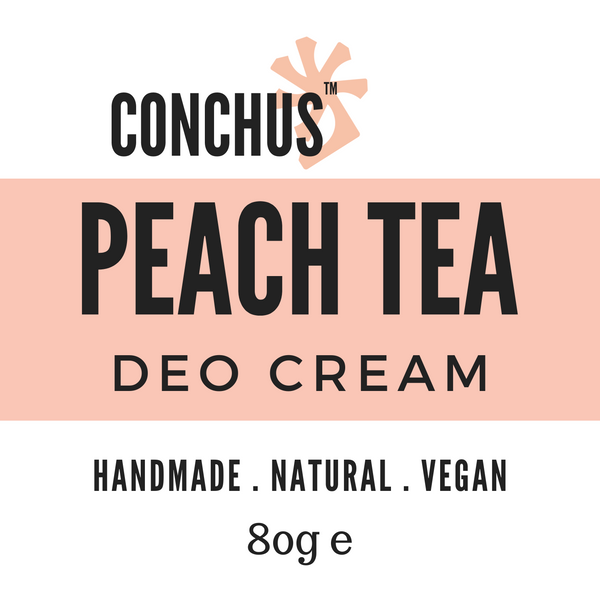
Peach Tea - soft, citrus-sweet
Bergamot, ylang ylang and a little eucalyptus. It's my own favourite, and it's suitable during pregnancy and breastfeeding. Not for you if sweet scents aren't your thing.
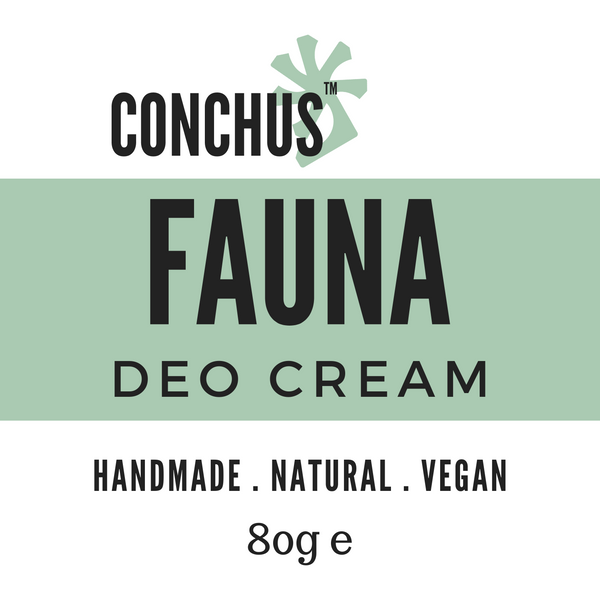
Fauna - herbal and earthy
Lemon, rosemary, thyme and patchouli, for anyone who doesn't want to smell floral or sweet. Not suitable during pregnancy or breastfeeding.
Pregnant or breastfeeding? Choose Cloud, Peach Tea or Cherry Deo Cream. Fauna, Olla and Lotus aren't suitable.
Sensitive to bicarb? Every deo cream I make contains a low amount of sodium bicarbonate. If you know it irritates you, start with a trial tin and patch test first - and if your skin reacts, stop using it.
Asthma or scent sensitivity? Choose Cloud, which has nothing added for scent, and patch test first.
You can see every scent side by side in my natural deodorant cream collection, and read what customers say in the reviews on each product page.
Questions people ask
What is the difference between deodorant and antiperspirant?
An antiperspirant reduces how much you sweat, using aluminium salts that form temporary plugs in your sweat ducts. A deodorant deals with the smell by neutralising or masking the odour-causing bacteria, and doesn't stop you sweating.
Is aluminium in antiperspirant safe?
The EU's Scientific Committee on Consumer Safety concluded in 2020 that aluminium compounds are safe in antiperspirants at set levels, and Cancer Research UK says there's no convincing evidence that antiperspirants affect breast cancer risk. I still choose not to use or make them, but that's my belief, not a safety warning.
Does aluminium free deodorant work?
Yes, for smell. An aluminium free deodorant doesn't stop you sweating, because it isn't designed to. It neutralises the odour, so you stay fresh while your body does its job. Hundreds of my customers say it works, and you can read their reviews on each deo cream page.
Why do you make deodorant and not antiperspirant?
It's my belief, not a medical claim. I studied radiotherapy at university, and I came away believing I'd rather give my body fewer unknowns. Cancer Research UK says there's no convincing evidence that antiperspirants affect breast cancer risk, so this is what I believe and what I chose, not something I can prove.
Is natural deodorant better for you?
I can't tell you it's safer, because the evidence doesn't show that. I think it's better because it works with your body instead of blocking it, you can read every ingredient including the scent, and it comes in packaging you can recycle.
Is natural deodorant better for the environment?
My deo creams come in aluminium tins, which can be recycled over and over. Aerosols can be recycled when completely empty, and plastic sticks and roll-ons often can't. I haven't done a full lifecycle study, so I won't claim a number, but I can tell you what happens to the packaging.
Is natural deodorant OK if I have asthma or sensitive skin?
Scent is a common trigger, and sprays put fragrance and propellant into the air you breathe. A cream doesn't do that, but my scented creams still use essential oils, which are fragrance. I'd choose Cloud, which has no essential oils and nothing added for scent, and patch test first. If you have asthma or a skin condition, ask your GP or pharmacist about your own triggers.
Will a natural deodorant stop me sweating?
No. Sweating is your body keeping you cool, and I'd never try to stop it. A deodorant cream keeps you smelling fresh while your body sweats as normal.
Why do I sweat more in perimenopause?
Hot flushes and night sweats are common symptoms of perimenopause and menopause, according to the NHS. If they're affecting your sleep or your days, speak to your GP.
Can I use a deo cream straight after shaving?
Yes. The shea butter, mango butter and jojoba oil make my deo creams gentle enough to use straight after shaving.
How long does a tin last?
An 80g tin lasts around 4-6 months of daily use. A 15g trial tin lasts around 2-4 weeks.
What about a big day, like a wedding or an interview?
I'd never suggest an antiperspirant, even then. Wear breathable fabrics like cotton or linen, and slip a 15g trial tin in your bag for a top-up. If sweating is a problem day to day, speak to your GP or pharmacist.
If you've never tried a deo cream, start small. A 15g trial tin is £4.45 and lasts long enough to know - you'll find them all in Try a Trial Size. Thinking of switching? I wrote what to expect in the first two weeks. And if you're curious how I make each batch, I wrote about what small batch actually means in my studio. Got a question? Leave a comment below or send me a message - I'll help you choose.
Camilla x


Tell me what you think