

A Simple Skincare Routine: What's Normal for Skin (and What You Can Skip)
In this post
Your skin isn't the problem. The marketing is.
Visible pores, dark circles, breakouts when your hormones shift, fine lines and skin that gets looser as you get older are not flaws to fix. They're what healthy skin does. But every one of them has a product with a price, so that's the message we've been sold, by skincare brands, for years. I think we've spent a lot of our lives "fixing" skin that was perfectly healthy and normal all along. A simple skincare routine - a gentle cleanser, a light moisturiser, and exfoliating once or twice a week - plus enough sleep, protein, water and a varied diet, supports your skin through all of it. You don't need a serum to have healthy skin, and you definitely don't need one with "menopause" on the label.
I'm Camilla, founder of CONCHUS. I've formulated and made natural skincare by hand since 2018, and I list every ingredient. I shared a post on Instagram recently about how distorted our idea of "normal" skin has become. You can see it here. This is the long version: what's normal, who profits from you believing it isn't, and what I'd do instead. Updated October 2026.
What's normal for skin, and what you can skip
| What you're seeing | What you can skip | What I'd do |
|---|---|---|
| Dark circles when you haven't slept. The skin under your eyes is thin, so tiredness shows up there first. | A caffeine infused, hyaluronic acid optimised, lacto-PDRN eye cream. | Go to bed earlier, sleep more, drink more water. |
| Visible pores. Pores are the openings for your hair follicles and oil. Everyone has them. | Reaching for skincare with salicylic acid (BHA), niacinamide (vitamin B3) or retinol to "fix" them. | Cleanse morning and evening. Exfoliate 1-2 times a week. |
| Breakouts when your hormones are changing. Oil production shifts when your hormones do, and it doesn't stop at 20. | Reaching for benzoyl peroxide, salicylic acid (BHA) or retinoids as your first step. | Cleanse twice a day with a gentle cleanser, use a light, non-pore-blocking moisturiser, exfoliate 1-2 times a week. If breakouts are painful, scarring or won't settle, see your GP or pharmacist. |
| Fine lines from facial expressions. Your skin folds where your face moves. Every laugh, every frown. | "Anti aging", hyaluronic acid, collagen or ceramides. | Get enough protein and omega 3 in your diet, drink enough water, use skincare with ingredients like rosehip, sea buckthorn and argan, and embrace them. |
| Skin that is looser and less firm as you get older. Collagen slowly decreases with age. | Collagen, caviar complex or gold in your skincare. | Get enough protein in your diet, plenty of vitamin C, and choose skincare containing sea buckthorn and baobab. |
I'm not a nutritionist, so if you're unsure what's right for your diet, ask your GP or a registered dietitian.
Who profits from you thinking your skin is wrong?
Most of the "good" skin you see online is make up, lighting and editing. Real skin has pores, lines and shadows, and it changes with your hormones, your sleep, the weather and your age.
Here's the bit I find hard to ignore. Every one of those normal things has a product with a name, a launch and a price. Pores have a primer and a serum. Dark circles have an eye cream. Fine lines have a whole aisle. If we believed they were normal, there would be nothing to sell. I'm not saying every brand sits in a meeting plotting it. I'm saying the business only works if we keep seeing ordinary skin as something to fix. And I'm part of that industry, so I'd rather say it out loud.
So we've spent years, and a lot of money, fixing skin that was healthy all along. It sells. But it's not a problem, and it's not you.
The unsexy bit: sleep, protein, water
Here's the part that doesn't fit on the label of a new serum or cream. Most of the things in the table can be supported by the same few things:
- a simple, gentle skincare routine
- a good, varied diet
- more protein in your meals
- more water
- more sleep
There's no commercial value in you sleeping more, because nobody can be buying things and asleep at the same time. But skincare is more than what you put on your skin. It's how you live, too.
A simple skincare routine for normal skin
This is the gentle, high quality routine I'd suggest. Three steps. Every ingredient listed, because there's nothing to hide.
- Cleanse, morning and evening. An oil-to-milk cleansing gel melts the day off and rinses clean, so skin isn't left squeaky or tight.
- Exfoliate, 1-2 times a week. A gentle polish, not a harsh scrub. It helps keep pores clear and skin feeling smooth.
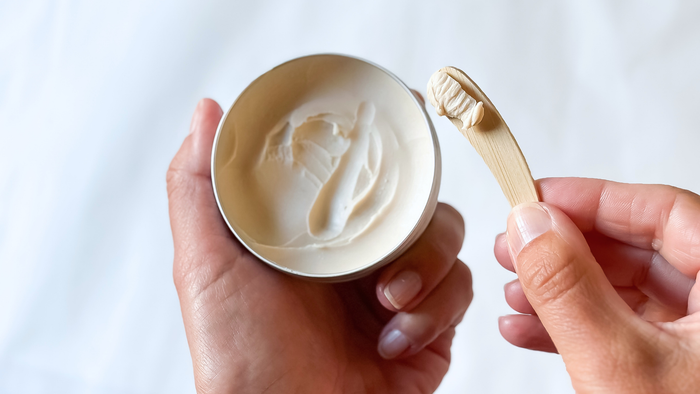
- Moisturise. A light, nutrient dense cream, pressed in while your skin is still damp.
Lotus Cleansing Gel - to cleanse
Soft and rich, with blackcurrant seed oil, plum kernel oil and golden jojoba. Made for dry, mature and everyday skin.
Miracle Cleansing Polish - to exfoliate
Fine bamboo powder and white clay in grape seed and apricot kernel oils. It turns into a creamy scrub with water, for face and body. Suitable for all skin types, including sensitive skin.
Lotus Light Cream or Cloud Light Cream - to moisturise
Lotus is my own pick, a softer, richer cream for face and body. Cloud is the same idea with no scent at all, for skin that's gone sensitive or reactive.
Not sure which is right for your skin? Have a look around the CONCHUS shop, or drop me an email at camilla@conchus.co.uk and I'll tell you honestly what I'd reach for.
Are dark circles normal?
Yes. The skin under your eyes is thinner than the rest of your face, so tiredness shows up there first. Genetics, allergies and the way light falls on your face all play a part too, so an eye cream isn't the answer to every dark circle. Sleep and water cost less and support your skin. If circles appear suddenly, only on one side, or come with swelling, ask your GP.
Are visible pores normal?
Completely. Pores are the openings for your hair follicles and oil, and everyone has them. Pore size is largely down to genetics, and no product can shrink them. Dermatologist Dr Justine Hextall explains that what you can change is how they look: unblocking them and improving skin texture makes pores appear smaller (Stylist). Cleansing morning and evening and exfoliating gently once or twice a week does that without needing a shelf of actives.
Is it normal to get spots in your 30s, 40s and beyond?
Yes. Your oil production shifts when your hormones do, and that doesn't stop at 20. In a Newson Health survey of women in perimenopause, 30% reported spots (Newson Health). Harsh, drying spot products can backfire on skin that's already losing water, so start gentle. If breakouts are painful, scarring or won't settle, that's a conversation for your GP or pharmacist, and you don't have to put up with it.
Are fine lines normal?
Yes. Your skin folds where your face moves. Every laugh and every frown leaves a little line over the years. They're a sign you've done a lot of both. I'd rather embrace them than spend a fortune on a cream that promises to erase them.
Is looser skin normal as you get older?
Yes. Collagen slowly decreases with age, and an estimated 30% of skin collagen may be lost in the first five years after menopause (Newson Health; review by Calleja-Agius). I'll be straight with you: no cream replaces that. Collagen powder is just protein, and protein is protein, so eating enough protein and vitamin C is the more sensible place to start. I wrote more about this in Do You Need a Menopause Skincare Routine?
Where active ingredients do help (and why you still don't need them)
I want to be fair here, because this isn't "actives are rubbish". Retinoids, salicylic acid and azelaic acid have a real evidence base for blocked pores, blemish-prone skin and texture, and dermatologists use them. The British Skin Foundation also notes that humectants such as hyaluronic acid, glycerin and urea, and ceramides, can help dry, more sensitive skin in menopause (British Skin Foundation).
My point is smaller than that. You don't need any of them for skin that's simply normal, and you don't need them because a label or a filter told you your skin is wrong. If you have persistent acne, scarring, or a skin condition, that's different, and a GP or dermatologist is the right place to start.
What is menowashing?
Menowashing is the aggressive marketing of menopause products without adequate scientific support. The British Skin Foundation describes products promoted heavily despite limited evidence of efficacy, often at inflated prices, in a global market estimated at $16.93 billion in 2023 (British Skin Foundation).
Their advice is the same as mine: read the ingredient list on the back, not the claims on the front. Ask whether the ingredients are actually useful for you and worth the price. Be wary of anything that sounds too good to be true, and choose brands that tell you exactly what's in the tin.
That includes brands like mine. The British Skin Foundation points out that "natural" and "organic" labels imply superiority but say very little in clinical terms. They're right. So I list every ingredient, I explain what each one is for, and I'd rather tell you what you can skip than sell you something you don't need.
I'm not a doctor, and skincare can't treat medical conditions. If your skin is sore, very itchy, breaking out badly or worrying you, speak to your GP or pharmacist.
Nut allergy? Lotus Cleansing Gel and Miracle Cleansing Polish contain nut or kernel oils (plum kernel or apricot kernel). Check the full ingredient list on each product page.
Pregnant or breastfeeding? Lotus Cleansing Gel and Lotus Light Cream aren't suitable. Reef Cleansing Gel and Cloud Light Cream are. Check each product page for the full pregnancy wording.
More from me
Skincare isn't the only place we're sold complexity. If you're sweating more in your 40s, or wondering whether natural deodorant is worth it, I wrote deodorant vs antiperspirant: what's the difference? and what to expect when you switch to natural deodorant. And for what changes in your skin through perimenopause, there's Do You Need a Menopause Skincare Routine?
Questions people ask
What is the simplest skincare routine?
Cleanse morning and evening with a gentle cleanser, exfoliate gently once or twice a week, and moisturise with a light cream. Add sleep, water, protein and a varied diet, because skincare is more than what you put on your skin.
What skincare do I need in my 40s?
The basics are the same as at any age: a gentle cleanser, a light moisturiser, gentle exfoliation once or twice a week and daily sun protection. Hormones shift in your 40s, so how your skin feels matters more than the number. If it's dry or sensitive, choose unscented and keep things simple.
Can you shrink pores?
No. Pore size is largely genetic. You can make pores look smaller by keeping them clear and improving skin texture, which gentle cleansing and weekly exfoliation can help with.
Are dark circles caused by tiredness?
Tiredness can make them more noticeable, because the skin under your eyes is thin. Genetics and allergies can contribute too, so sleep helps but isn't the whole story.
Is it normal to have hormonal breakouts in your 40s?
Yes. Oil production shifts when hormones do, and it doesn't stop at 20. Keep your routine gentle, and speak to your GP or pharmacist if breakouts are painful, scarring or persistent.
Do I need anti-ageing skincare?
Not to have healthy, normal skin. Fine lines and looser skin are part of ageing. A simple routine, enough protein, water and sleep, and daily sun protection support skin more than a new serum.
Do I need collagen in my skincare?
No. A cream can't replace collagen lost with age or after menopause. Eating enough protein and vitamin C is the better place to start.
Imperfect skin is normal. Be kinder to yourself. If you'd like to try the routine, start small with a 10g light cream trial tin and see how your skin feels after a week or two. And tell me: which of these do you pick at the most? Leave a comment below or send me a message. I read every one.
Camilla x

Tell me what you think